



Hi, I'm Jen! I'm a personal finance expert and money coach aiming to help you take control of your money. I went from being broke to a six-figure net worth and am now on track to be financially independent at age 40. Discover Jen's story
Are you fed up with the nine-to-five grind? Being trapped in a soulless job feels suffocating and ruins your life. But for many people, it is reality.
Yet it doesn’t have to be this way. Anyone can break free from life as a corporate slave. You don’t need a high salary or millionaire parents. This article shows you how to escape the rat race for good.
💡 Quick Answer: How to Escape the Rat Race
Escaping the rat race means reaching a state where you longer have to work. Your existing resources are enough to sustain you for the rest of your life.
The steps to quit your job once and for all include:
- Calculate how much money you need
- Find alternatives to your job
- Fight lifestyle inflation
- Build healthy money habits
- Start building passive income streams
What Does Escaping the Rat Race Mean?
“Rat race” was a term first used in the early 1900s. It describes “an endless, self-defeating, or pointless pursuit” in relation to one’s job.
The rat race nowadays relates to working long hours to buy status symbols. However, these items do not increase happiness. To afford and maintain this status, a person must work harder and harder.
Escaping the rat race means putting a stop to this. For some people, escaping the rat race means reaching financial independence. For others, it means switching to a job that brings fulfilment rather than a high income.
Why Would You Want to Quit or Escape the Rat Race?
People have different reasons to quit or escape the rat race. These may include:
- Wanting to spend more time with their children
- Improving their mental health
- Having the freedom to do what they place
- Relaxing and having a worry-free life
- Spending more time on hobbies
- Wanting to travel more
How to Escape the Rat Race
While everyone can escape the rat race, it requires effort. You’ll need to get on top of your finances and save money. The steps below show you how.
1. Calculate How Much Money You Need to Quit

Do you know how much money you need so that you never have to work again? It is probably less than you think! The amount you need to retire earlier is your FIRE number. FIRE stands for:
- Financial
- Independence
- Retire
- Early
There are several ways to calculate your FIRE number. The easiest way is to input your data into a FIRE calculator. These follow the concept that your savings generate interest. You can take some of this interest to live on without touching the underlying capital.
2. Find Alternatives to Your Job
Your job may be toxic and the main reason you want to escape the rat race. But before you quit without a plan, assess whether you can fix the issues. For example:
- Could you cut down your hours?
- Can you talk to your manager about your issues?
- Could you switch roles but stay within your company?
This could make the remaining time in your job more enjoyable.
How Much Does Your Job Cost You?
A high salary does not necessarily mean you earn a lot. Jobs are associated with costs unrelated to your salary, including:
- Unpaid time spent at work
- Opportunity costs
- Mental health burden
- Commuting costs
A well-paid job might not be worth it if these costs are too high. This is especially true if your job is already toxic.
Should You Try to Increase Your Salary?
One way to quit or escape the rat race is to work harder and increase your salary. This means you may have more pressure over a short period. However, you can save enough to quit after a few years.
Whether you want to focus on a high salary vs job satisfaction is up to you. As with anything, there are pros and cons to this approach. On one hand, you might risk burnout. On the other hand, you can retire earlier and enjoy freedom.
Should You Become Your Own Boss?
If your job costs are too high or you want to leave, consider building your own business. Having a business means you can work on your terms. You can set your hours and create an asset you own.
Starting a business is easier than you think. Firstly, think about your skills and hobbies. If you can monetise your skills, you can offer your services on platforms such as Fiverr. You could also do something less traditional and open an OnlyFans account.
3. Fight Lifestyle Inflation
Lifestyle inflation describes the trend of spending increasing in line with income. The more you earn, the more money you will spend. Lifestyle inflation does not have to be wrong. However, fighting it helps to get ahead financially. When you increase your income, save the difference and don’t increase your spending.
4. Build Healthy Money Habits
To stop struggling with your finances, start forming healthy money habits. Shifting your mindset and establishing habits makes saving money much more effortless. Bad financial habits include:
- Leaving money in your current account
- Only making minimum payments on debt
- Not planning ahead
- Making impulse purchases
Read the best financial independence books to understand how to view money. These books show different approaches on how to improve your money management.
5. Decide If You Want to Buy Property
You do not need property to escape the rat race. However, many people prefer to own their home. They may also like a rental property as an extra income stream.
If you own your home, your approach to financial independence may differ from renters. You may focus on paying off your mortgage first.
Or you could make minimum payments on your mortgage and invest your money instead. Both approaches work, and each has its advantages.
6. Start Earning Passive Income
Passive income describes the income you do not have to work for. With passive income, you’ll have an income if you do nothing. Examples of passive income include:
- Investment returns
- Interest
- Rental income (if you outsource the management to an agency)
- Income from display ads
- Online businesses (that someone else manages for you)
- Affiliate marketing commission
Passive income is valuable because you can have unlimited income sources. You also won’t have to work to get this income.
Start Investing in the Stock Market
Investing is not risk free. Only invest money you can afford to lose.
Stock market investments are the most accessible passive income source for many people. Anyone can open an investment account for free.
The reason investing is a great way to generate wealth is compound interest. Compound interest means that you will earn interest on your interest. Your money grows exponentially if you leave it invested (typically ten years or more). Let’s assume you invest £1000 with 7% growth per year. Here is how your investment will develop over time:
| Year | Compound Interest | No Compound Interest |
|---|---|---|
| 1 | £1000 | £1000 |
| 5 | £1311 | £1280 |
| 10 | £1838 | £1630 |
| 15 | £2579 | £1980 |
| 20 | £3617 | £2330 |
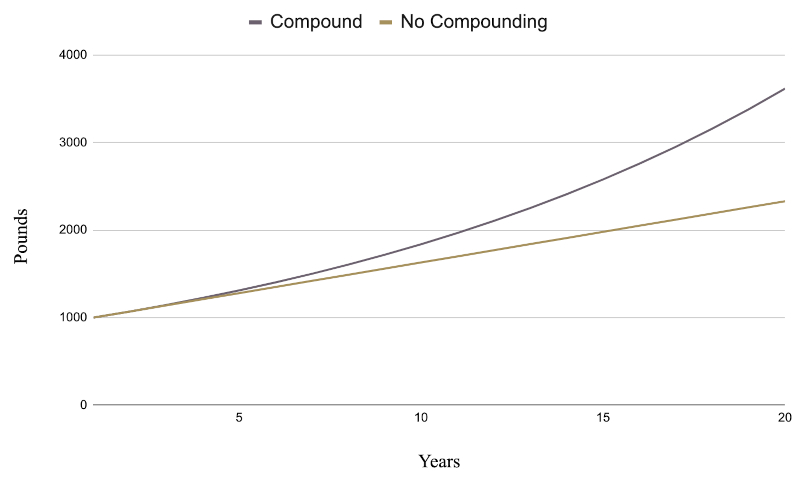
As you can see from the table, compound interest means your money multiplies by itself. However, it takes time for it to reach its potential. Read my Invest With Confidence guide to learn more.
Other Forms of Investing
The stock market isn’t for everyone. Luckily, investing can take several different forms:
- Real estate. Property investment can be an excellent way to generate passive income. Purchasing a rental property can provide monthly rental income. Meanwhile, buying and selling properties (flipping) can lead to capital gains.
- Rental property. Owning rental properties can be lucrative if you manage them well. Ensure you have well-defined criteria for choosing properties. Additionally, consider hiring a property management company. They can handle day-to-day tasks and issues, freeing up your time to focus on other investments.
- Peer-to-peer lending. This strategy involves lending money to individuals or businesses in exchange for interest payments. By investing in peer-to-peer lending platforms, you can diversify your investment portfolio. However, remember that this type of investment carries risks.
7. Live Frugally
If you spend less money, you must earn less to escape the rat race. However, reducing your spending can be tricky unless you change your lifestyle.
Living frugally means being intentional about your spending. Frugal people do not overspend money. They only buy what they need, nothing more.
This means frugal people do not bother with status symbols, junk, or random purchases. In return, they have more money for things they need and want.
8. Track Your Progress
Tracking your progress ensures you always stay aligned with your goal. You will also be able to see where you can improve and spot mistakes and errors.
You can use a financial independence app such as Topia to help you. A spreadsheet also does the job.
9. Retire to a Low-Cost Country
Retiring in a different country lowers the cost of living. You might also get a nicer climate as a bonus! You can retire with a smaller pension pot because you lower your monthly expenses by moving to a cheaper country.
This means you can escape the rat race and retire earlier. Retiring to a lower-cost country, geo arbitrage, is a popular hack for FIRE enthusiasts. Your pension or income should be in a strong currency such as the dollar or pound.
Frequently Asked Questions
How can I quit the 9 to 5 lifestyle?
To quit the nine-to-five lifestyle, start by evaluating your finances and setting clear goals. Consider picking up a side hustle or building a passive income stream to diversify your income.
Transition from your traditional job to flexible work arrangements, such as freelancing. Network with like-minded individuals and learn from their experiences.
What are alternatives to traditional employment?
Alternatives to traditional employment include:
- Freelancing
- Remote work
- Entrepreneurship
- Passive income streams
- Investments
These options provide greater flexibility and control over your work-life balance. Research each option and choose the one that aligns with your skills, interests, and goals.
How can I achieve financial independence quickly?
Achieving financial independence quickly requires crucial steps such as setting financial goals. Focus on increasing your income by developing multiple income streams. Make wise investments and maintain discipline in your spending habits.
How to live on a minimal budget after leaving the rat race?
Living on a minimal budget involves setting priorities and making conscious spending choices. Reduce your expenses by adopting a frugal lifestyle. Track your expenses, set a realistic budget, and stick to it. By being resourceful and mindful of your spending, you can adjust to living on a minimal budget.
How to balance family life while seeking financial freedom?
Balancing family life while seeking financial freedom requires clear communication. Schedule family time as an essential and non-negotiable part of your routine. Involve your family members in pursuing financial freedom and consider their opinions.
What strategies can help in breaking free from the rat race?
Strategies for breaking free from the rat race include:
- acquiring new skills
- Increasing your financial knowledge
- Networking
- Setting realistic goals
- Developing multiple income streams
- Maintaining a disciplined approach to saving and investing
Consider seeking a mentor to guide you during this process.
Summary
The rate race describes a cycle where you have to earn more and more to achieve and maintain your status. This often leads to the loss of happiness and can even end in depression. You can quit or escape the rat race in several ways:
- Calculate how much money you need to quit
- Find alternatives to your job
- Fight lifestyle inflation
- Build healthy money habits
- Start earning passive income
- Live frugally
- Retire to a low-cost country
You may be happy by switching to a more frugal lifestyle and a less-well-paid but more fulfilling job. Or you might want to work towards early retirement. Both are valid ways to quit and escape the rat race for good.
If you like this post, please help My Money Yard grow by sharing it with your friends.