



Hi, I'm Jen! I'm a personal finance expert and money coach aiming to help you take control of your money. I went from being broke to a six-figure net worth and am now on track to be financially independent at age 40. Discover Jen's story
When comparing high salary vs job satisfaction, both are important. But what do you do if you can’t balance them both?
Many people find themselves in soulless but well-paid jobs yearning for fulfilment. Equally, many people work in low-paid jobs they love, regretting their choice. Is a high salary the key to happiness, or should you focus on a job that makes you happy? Read the article below to find out!
💡 Quick Answer: High Salary vs Job Satisfaction
Both having a job with a high salary and having a job that satisfies you have advantages. One is not strictly better than the other. Instead, it depends on what your priorities are.
A job with a high salary means that you can afford more. You could retire early, meaning you’d spend less time in that job. A job that satisfies you means you can work happily every morning. You won’t dread Mondays. Plus, you can compensate for the missing income by starting a side hustle.
- 💡 Quick Answer: High Salary vs Job Satisfaction
- What Is a High Salary?
- A High Salary Does Not Equal High Job Satisfaction
- Is a High Salary Associated With More Happiness?
- Benefits of a High Salary
- Disadvantages of Having a High Salary
- Benefits of High Job Satisfaction
- The Disadvantages of High Job Satisfaction
- Which Is More Important, High Salary vs Job Satisfaction?
- Be the Winner No Matter What
- Frequently Asked Questions
- High Salary vs Job Satisfaction Summary
What Is a High Salary?
First, you may want to know what a high salary is. There is no clear-cut definition for this, and I elaborate more on this in my post about high salaries in the UK. For the sake of this post, a high salary shall be defined as twice the UK average, meaning £66,000.
A High Salary Does Not Equal High Job Satisfaction
If you have a high-paying job that you love, congratulations! Unfortunately, most people are not this lucky. They have to choose between high pay or happiness at work.
Currently, 21% of Brits are not satisfied with their jobs. They feel that higher pay would improve their work-related happiness.
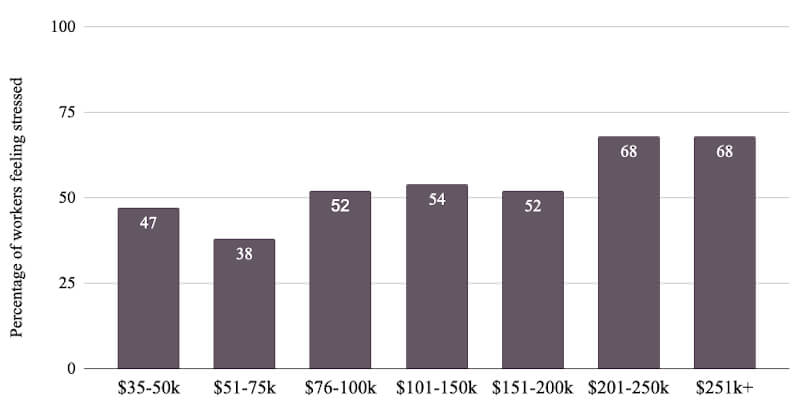
However, a survey on LinkedIn also showed that high-salary jobs are often more stressful than lower-paying jobs. In this study, those working in jobs paying above $200k per year reported the highest stress levels across all groups.
Is a High Salary Associated With More Happiness?
Why decide when you can have both? A study from Wharton Business School with 33,000 participants showed that happiness increased with income.
According to the study, people on high salaries are happier because they feel more in control. In the study, an income of $75,000 appeared to be a critical threshold.
At this income level, positive feelings exceeded negative feelings. However, happiness increased even after this threshold until it plateaued at a salary of around $250,000. This means you can pursue your high-salary dream career without worrying about your happiness.
Benefits of a High Salary
Earning a good salary has many advantages. You have more money and can afford better holidays, a bigger house, and a fancy car. Or you can save money and retire early, perhaps after only five to ten years of work.
1. Being Able to Retire Early
Even if you do not like your job, you would only have to do it for a short period. Then, you can retire and spend the rest of your life on passion projects or travelling.
Early retirement means saving at least half your salary and investing those savings. Popular investment choices include a property or the stock market. Eventually, you reach a point where your investment income covers your monthly bills, and you can quit your job.
2. Being Able to Afford a Better Lifestyle
You still benefit from a higher salary if you follow a more traditional lifestyle and work until your sixties. Firstly, better-paying jobs often come with benefits such as private healthcare. Plus, you can also afford healthier food such as superfoods or organic produce.
Overall, you may live healthier than people earning a lower salary. You can also afford to live more comfortably in your leisure time. What you do with your money is up to you. Some benefits may be being able to:
- Wear designer labels
- Buy fancy cars
- Have an expensive hobby
- Take luxury holidays
- Outsource chores such as cleaning
- And more
3. Being Prepared for Emergencies
If you are made redundant, high-paying jobs often have better redundancy packages. Plus, it is easier to find a new job than if you had worked a low-paid job. Similarly, you can afford better care if you or a family member falls ill.
4. Having Better Mental Health
There are also less apparent benefits of a high salary. Not having to worry about money, for example. Knowing you have the money to pay your bills for a year is a huge reassurance.
Earning a high salary also means you are less likely to live paycheck to paycheck. It’s easier to pay off debts and avoid spiralling debt that could cause anxiety and depression. Though, of course, this also depends on your spending behaviour.
You should also compare a high salary vs career growth potential.
Disadvantages of Having a High Salary
A high salary may mean:
- Working long hours
- Having a lot of responsibility
- Work-related stress
- Pressure from higher-ups
Plus, most well-paid jobs are office based, so you sit in front of the computer most days. Some people enjoy these jobs, and nothing is wrong with that. But spending countless hours doing something you hate can be psychologically damaging.
Consequences can be depression, burn-out syndrome, and death in extreme cases. Another factor to consider is time. If you work a lot, you miss out on other things. You have less time for your loved ones. You may have difficulty finding a spouse or miss your children’s milestones.
Benefits of High Job Satisfaction
Having a job that you are genuinely passionate about means you never work a day. Anyone knows which jobs are high paying, but finding a job you love is much more difficult.
1. Better Wellbeing
You will have a happier, more fulfilled life, doing your hobby every day. This has benefits beyond the job, leading to a more positive outlook in life, better relationships, and even better health.
2. Making an Impact
Passion jobs are more likely to be meaningful to society than well-paid jobs. For example, you may work for a non-governmental organisation or a charity.
Knowing that you do something for the benefit of others may make you feel more confident. You can also identify yourself with your work wholly.
Other low-paid jobs may lie in the arts. Many aspiring writers, actors, and other artists make do with a low salary. However, they have the potential to become famous one day and have an impact on society.
3. Using Your Talents
When comparing high salary vs job satisfaction, using your talents is a great plus, even in a low-paid job. Doing what you are good at gives you a massive boost in confidence and benefits your mental health.
The Disadvantages of High Job Satisfaction
Working in a low-paid job means you will feel the disadvantages even if you love your job. You may struggle to pay your bills and have little money left for your leisure time. You may feel that you are missing out.
Furthermore, reaching financial independence and retiring early is nearly impossible. People also often cite a lack of career progression as a disadvantage to their passion job. Reaching your limit can be frustrating, especially when you can do more.
Which Is More Important, High Salary vs Job Satisfaction?
In a survey, 54% of candidates preferred job satisfaction over a good salary when defining career success. Regarding priorities, only 43% of candidates selected a high salary. This is a pretty even distribution with a high salary slightly losing.
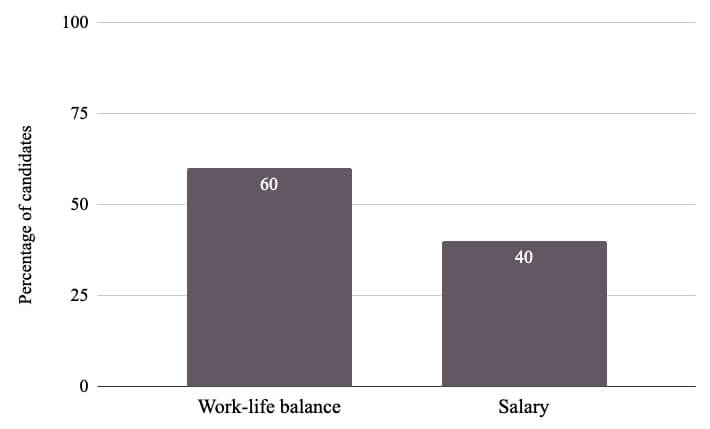
In another survey, 71% of participants responded that they would quit their jobs if offered higher pay elsewhere. They chose this option knowing they would be less satisfied at their new company. People’s preferences vary widely. This variation indicates that one option is not better than the other.
Ultimately, the choice depends on you. Every job will have pros and cons, and no job is perfect. If you switch careers, you may like your new job even less even though it is more fulfilling or pays more.
Making the best of the situation and compensating for the shortcomings of your job leads to the best outcome.
Be the Winner No Matter What
Whether you are in a high-paying job you hate or a low-paid job you love, you can be a winner. Both ways can help you escape the rat race.
If You Are in a Well-paid But Soul-crushing Job
If you are in a highly-paid job that you hate, you can still attempt to improve your situation. Speak with your manager or colleagues to improve the aspects of your job you hate particularly.
You can also spend your free time on things you are passionate about to compensate for your dissatisfaction at work. However, the best solution for you may be early retirement. Fortunately, this is relatively easy to reach when you earn a good salary.
If you maximise your savings and cut expenses, you may only have to work for as little as five more years. Having early retirement in front of your eyes may massively improve your mental health if you hate your job.
When You Are in a Happy But Low-paid Job
If you love your job but do not make much money, the solution may be simpler than you think. There are a couple of ordinary ways to increase your salary. These include negotiating with your manager or switching companies.
However, this may not make much of a difference. In this case, you can set up side hustles in your spare time to make up for the shortfall in income.
You may want to consider getting a work-from-home job, blogging, or something else you are good at. This way, you still benefit from doing something you love and have more money.
Frequently Asked Questions
Why Is Job Satisfaction More Important Than Salary?
Job satisfaction is more important than salary because happiness is more valuable to many people than money. This is, of course, subjective, and you may disagree.
Overall, job satisfaction means that you will be happier in life. You can make up for the shortcomings in income by starting a side hustle.
What Is the Relationship Between Income and Job Satisfaction?
The relationship between income and job satisfaction is complicated. Some studies report that high earners are also more satisfied with their jobs. However, the downside of high-paying jobs can decrease job satisfaction.
Is Salary the Most Important Factor in Job Satisfaction?
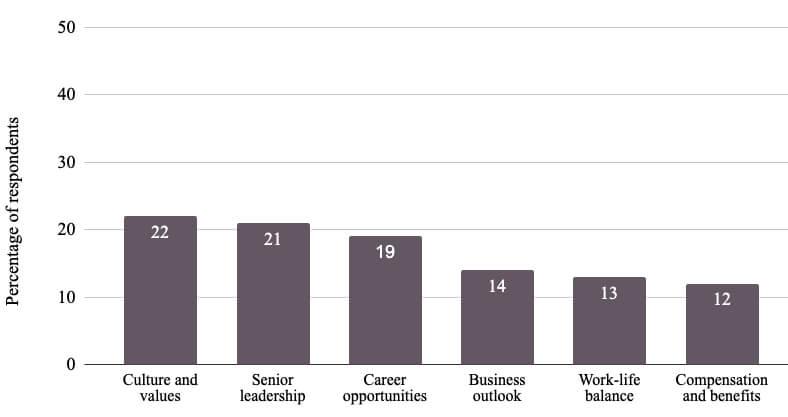
Salary is not the most important factor in job satisfaction. A survey by Glassdoor found that company culture and values was the most important factor. Overall, 22% of respondents chose this option. Income did not even make it into the top five factors.
High Salary vs Job Satisfaction Summary
There is no absolute answer to what is more important when comparing salary vs job satisfaction. Which one you choose depends on yourself and your goals in life.
Whether you end up with a well-paid job you hate or a job you love that does not pay well, there are always ways to improve your situation. The critical point is to stop complaining. Learn to appreciate the good sides of your job and compensate for the downsides.
If you like this post, please help My Money Yard grow by sharing it with your friends.